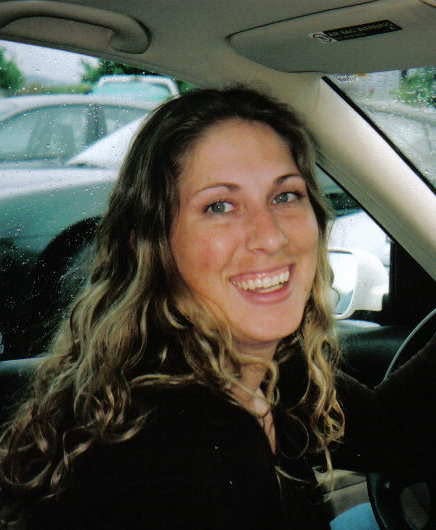
The first photo was taken in 2004, at the height of what I now recognize as my addiction to alcohol.
This is not a heroic sobriety story. It took years of not drinking before I could see what alcohol had actually been costing me.
I drove around with an ice chest in the trunk of my Jetta—Budweiser on the bottom and a fifth of Crown tucked inside. I smoked Parliament cigarettes and wore “Good Time Charlie” like it was my whole damn personality.
I lived for the party. Any party. Any excuse to get fucked up.
When I drank, I wanted two things: sex and cigarettes.
I routinely drove drunk. I put myself and other people in danger. I was inappropriate, crude, reckless, and flat-out wild.
And if you had met me then, you probably would have thought I was fun.
That’s the tricky thing about addiction. It doesn’t always look like someone falling apart. Sometimes it looks like the woman lighting up the room—the one telling the stories, making everybody laugh, and keeping the party going.
Look at that smile. You cannot see the destruction in it.
You cannot see the mornings when I woke up in shame, not knowing what I had done, and had to listen as other people told me stories about myself.
Stories about me that I could not remember living.
The Completely Unglamorous Way I Got Sober
Here is the truth about how I got sober:
A friend of mine was doing keto.
I learned that beer was loaded with empty calories, so I stopped drinking them.
That’s it.
There was no rock-bottom revelation. No heroic moment when I looked into the mirror and finally admitted alcohol was destroying my life. I wasn’t trying to become sober. I was trying not to drink my calories.
Then, suddenly, I was three months without alcohol.
Then six months.
Then an entire year.
Somewhere along the way, a question occurred to me: What if I never drank again?
So I didn’t.
Once I made up my mind, putting alcohol down wasn’t a struggle. I don’t say that because I am stronger than anyone else or because quitting should be easy. That is simply the truth of my experience.
I got sober before I fully understood why I needed sobriety.
The Story Became Clearer From a Distance
It was only after celebrating year after year that I gained enough distance to see the story more clearly.
I could finally see the version of myself who had been numbing.
The version who made the stupidest decisions. The version who continuously chose her “carnal desires” over the morals she carried deep within her. The version who woke up in shame, unable to remember what she had done, and had to hear about it from everyone else the next morning.
Alcohol created what felt like an alter ego. There was the woman I knew myself to be—and then there was the woman who appeared after enough Budweiser and Crown. She could be funny, sexual, crude, reckless, inappropriate, and completely untethered from the values the sober version of me still carried.
People called her fun.
Sometimes I did too.
Until morning came.
Sobriety gave me enough distance to turn around and see her—not so I could condemn her, but so I could understand how far away from myself I had been willing to go and call it a good time.
When I Drink in My Dreams
Even now, I sometimes wake up terrified after dreaming that I drank.
For those first few seconds, I believe I have ruined my sobriety. The fear is immediate and enormous. Then I realize it was only a dream, and the relief washes over me.
That is how much my sobriety means to me.
I am not the only one. A study of more than 2,000 people who had resolved a significant alcohol or drug problem found that approximately one-third had experienced dreams about drinking or using after entering recovery. The dreams tended to become less frequent with more time in recovery, but they could still occur years later.
For me, those dreams are not evidence that I secretly want to drink. They remind me how fiercely some part of me protects what I have built.
I didn’t simply stop drinking. I stopped abandoning myself.
Yes, a Cold Corona Still Sounds Good Sometimes
There are days when I am working in the garden or heading to the river and think a cold Corona with lime and salt sounds pretty damn refreshing.
But then I let the fantasy play all the way through.
I think about what alcohol would actually do inside my body—not just how the first cold sip might taste.
Alcoholic drinks contain ethanol, which the World Health Organization identifies as a toxic, psychoactive, dependence-producing substance. Alcohol is also a known human carcinogen. Cancer risk begins with the first drink and rises as consumption increases; changing the drink, the price, or the glass does not change the ethanol inside it.
Heavy or chronic alcohol use can disrupt multiple parts of the endocrine system involved in stress response, metabolism, reproduction, thyroid function, blood sugar regulation, growth, and communication between the brain and hormonal organs.
Research also links alcohol consumption in women with changes in estrogen and other sex hormones, although the individual effects depend on factors such as how much and how often someone drinks, age, menstrual status, and hormone use.
So yes, the Corona can still sound refreshing.
But disrupting my body and reopening a door I fought hard to close does not.
That is the whole story—not just the pretty first sip.
Recovery Does Not Have One Face
My way is not the only way.
Some people need treatment, medication, meetings, therapy, community, or many attempts before something holds. Some stop privately. Some stop all at once. Some begin by questioning their relationship with alcohol and slowly find their way out.
In 2024, an estimated 28 million Americans age 12 and older met the criteria for alcohol use disorder, while only 7.6 percent received alcohol-related treatment that year. That treatment gap matters, but it is not the whole story.
Recovery is possible.
In a nationally representative study of nearly 7,800 adults whose alcohol use disorder began at least a year earlier, more than half reported no remaining symptoms other than craving during the previous twelve months. Other research suggests that many people improve outside formal treatment too.
Statistics can tell us recovery happens.
Stories help us recognize that it might be possible for us.
The Woman I Chose
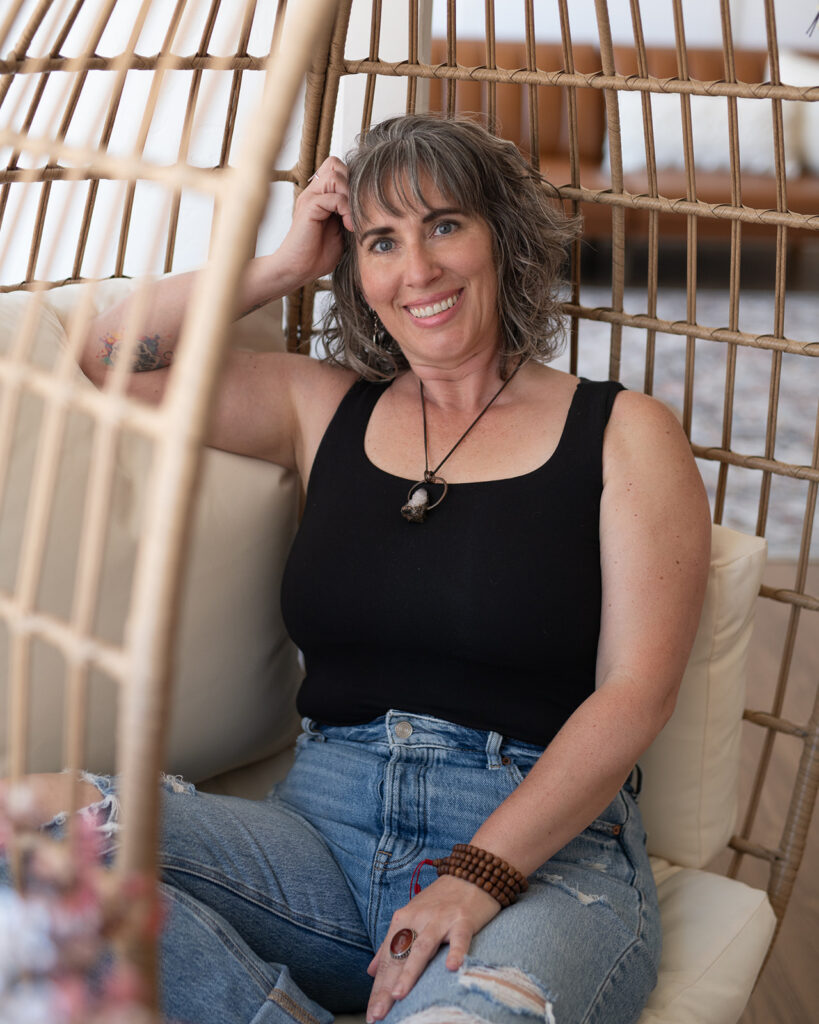
The woman in the second photo did not appear overnight.
I chose her—one clear morning, one uncomfortable feeling, one honest conversation, and one alcohol-free day at a time.
I look different now.
I feel different now.
But more than that, I know myself differently.
Sobriety didn’t make me less wild. It returned my wildness to me—without the wreckage.
I used to believe alcohol set the wild woman in me free.
It didn’t.
It made her reckless. It made her unavailable. It handed her appetite the steering wheel and called that freedom.
Sobriety did not tame me. It gave me back my choices. It gave me a body I could hear, a life I could remain present for, and gifts I no longer needed to numb.
Why I Tell the Story
Along the way, sharing my story has inspired other people to give up alcohol completely. I do not take credit for their sobriety. That choice and that courage belong to them.
But knowing my story helped someone else recognize themselves? Knowing my truth gave another person permission to tell themselves the truth?
That feels worth every ounce of strength it has taken.
Maybe that is part of why we tell the truth about who we have been. Not to punish her. Not to stay tethered to her. But to reach backward with compassion—and leave a light on for whoever is still finding their way out.
You do not have to lose everything before you are allowed to choose yourself.
Recovery is possible.
You do not have to become less of yourself to get sober.
I do not hate the woman in the first photo. I understand her now.
She wasn’t bad. She wasn’t broken. She was surviving the only way she knew how.
But she deserved more than survival.
And so did I.
The woman in both photos is me.
One was trying desperately not to feel.
The other knows that her ability to feel it all is one of her greatest gifts.
Six years sober.
Six years of choosing myself over numbing.
Six years of remembering who the fuck I am.
If something in my story stirred something in you, be curious about it.
You don’t have to wait for rock bottom. You don’t have to have the perfect words. And you don’t have to figure it out alone.
Ask me a question. Leave a comment. Send me a message. Let’s have an honest conversation about alcohol, sobriety, numbing, recovery—or the story you are beginning to see differently.
I am an open book, and I have resources.
No judgment. No preaching. Just truth, curiosity, and a place to begin.
Big love. Deep roots. Soft shoulders. Brave f*cking heart.
—Rae
Resources and Research
Drinking and Drug-Use Dreams in Recovery
https://pmc.ncbi.nlm.nih.gov/articles/PMC6261528/
World Health Organization: Alcohol Fact Sheet
https://www.who.int/news-room/fact-sheets/detail/alcohol
World Health Organization: Alcohol and Cancer Risk
https://www.who.int/europe/news/item/04-01-2023-no-level-of-alcohol-consumption-is-safe-for-our-health
Alcohol’s Effects on the Endocrine System
https://arcr.niaaa.nih.gov/sites/default/files/2021-02/pathophysiology-effects-alcohol-abuse-endocrine-system.pdf
The Endocrine System and Alcohol Drinking in Females
https://pmc.ncbi.nlm.nih.gov/articles/PMC7374925/
Alcohol Treatment in the United States
https://www.niaaa.nih.gov/alcohols-effects-health/alcohol-topics-z/alcohol-facts-and-statistics/alcohol-treatment-united-states
NIAAA: Support Recovery
https://www.niaaa.nih.gov/health-professionals-communities/core-resource-on-alcohol/support-recovery-its-marathon-not-sprint
Epidemiology of Recovery From Alcohol Use Disorder
https://pmc.ncbi.nlm.nih.gov/articles/PMC7643818/