• Skip to primary navigation
  • Skip to main content
My Heart of the Story | Raelynn Beintker

My Heart of the Story | Raelynn Beintker

Unscripted stories, honest connection, and a brave f*cking heart.

  • Home
  • About
  • Podcast
  • 🌿 Herbal Infusions for Women’s Hormone Health
  • Connect
    • Every Story Matters
  • Love Notes & Truth Bombs
  • Show Search
Hide Search

Raelynn Beintker

The Woman in Both Photos Is Me

Raelynn Beintker · September 9, 2026 ·

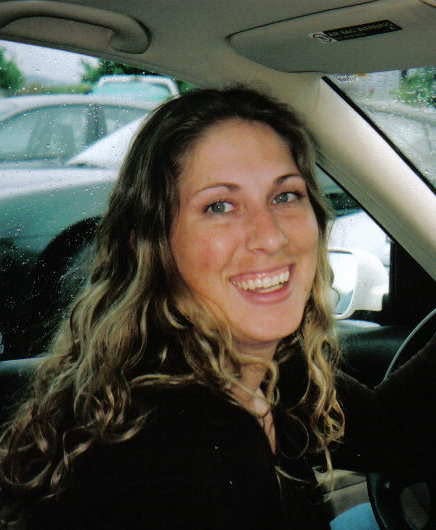
Then — 2004
Then — 2004
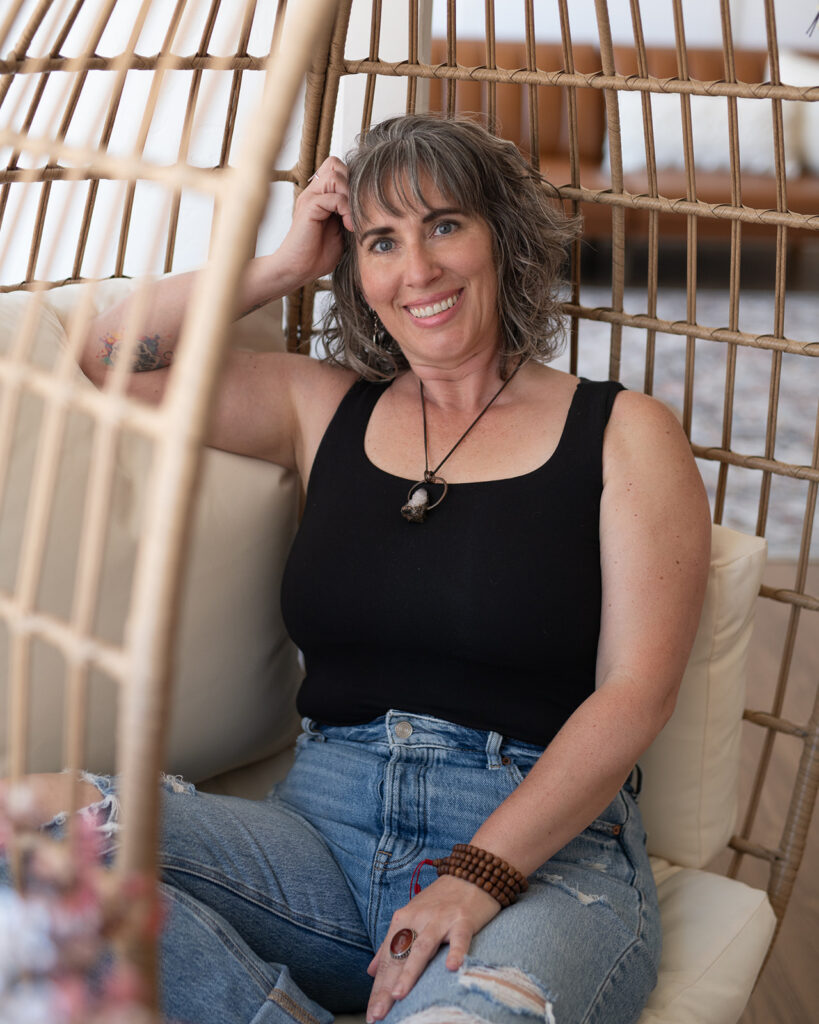
Now — six years sober

The first photo was taken in 2004, at the height of what I now recognize as my addiction to alcohol.

This is not a heroic sobriety story. It took years of not drinking before I could see what alcohol had actually been costing me.

I drove around with an ice chest in the trunk of my Jetta—Budweiser on the bottom and a fifth of Crown tucked inside. I smoked Parliament cigarettes and wore “Good Time Charlie” like it was my whole damn personality.

I lived for the party. Any party. Any excuse to get fucked up.

When I drank, I wanted two things: sex and cigarettes.

I routinely drove drunk. I put myself and other people in danger. I was inappropriate, crude, reckless, and flat-out wild.

And if you had met me then, you probably would have thought I was fun.

That’s the tricky thing about addiction. It doesn’t always look like someone falling apart. Sometimes it looks like the woman lighting up the room—the one telling the stories, making everybody laugh, and keeping the party going.

Look at that smile. You cannot see the destruction in it.

You cannot see the mornings when I woke up in shame, not knowing what I had done, and had to listen as other people told me stories about myself.

Stories about me that I could not remember living.

The Completely Unglamorous Way I Got Sober

Here is the truth about how I got sober:

A friend of mine was doing keto.

I learned that beer was loaded with empty calories, so I stopped drinking them.

That’s it.

There was no rock-bottom revelation. No heroic moment when I looked into the mirror and finally admitted alcohol was destroying my life. I wasn’t trying to become sober. I was trying not to drink my calories.

Then, suddenly, I was three months without alcohol.

Then six months.

Then an entire year.

Somewhere along the way, a question occurred to me: What if I never drank again?

So I didn’t.

Once I made up my mind, putting alcohol down wasn’t a struggle. I don’t say that because I am stronger than anyone else or because quitting should be easy. That is simply the truth of my experience.

I got sober before I fully understood why I needed sobriety.

The Story Became Clearer From a Distance

It was only after celebrating year after year that I gained enough distance to see the story more clearly.

I could finally see the version of myself who had been numbing.

The version who made the stupidest decisions. The version who continuously chose her “carnal desires” over the morals she carried deep within her. The version who woke up in shame, unable to remember what she had done, and had to hear about it from everyone else the next morning.

Alcohol created what felt like an alter ego. There was the woman I knew myself to be—and then there was the woman who appeared after enough Budweiser and Crown. She could be funny, sexual, crude, reckless, inappropriate, and completely untethered from the values the sober version of me still carried.

People called her fun.

Sometimes I did too.

Until morning came.

Sobriety gave me enough distance to turn around and see her—not so I could condemn her, but so I could understand how far away from myself I had been willing to go and call it a good time.

When I Drink in My Dreams

Even now, I sometimes wake up terrified after dreaming that I drank.

For those first few seconds, I believe I have ruined my sobriety. The fear is immediate and enormous. Then I realize it was only a dream, and the relief washes over me.

That is how much my sobriety means to me.

I am not the only one. A study of more than 2,000 people who had resolved a significant alcohol or drug problem found that approximately one-third had experienced dreams about drinking or using after entering recovery. The dreams tended to become less frequent with more time in recovery, but they could still occur years later.

For me, those dreams are not evidence that I secretly want to drink. They remind me how fiercely some part of me protects what I have built.

I didn’t simply stop drinking. I stopped abandoning myself.

Yes, a Cold Corona Still Sounds Good Sometimes

There are days when I am working in the garden or heading to the river and think a cold Corona with lime and salt sounds pretty damn refreshing.

But then I let the fantasy play all the way through.

I think about what alcohol would actually do inside my body—not just how the first cold sip might taste.

Alcoholic drinks contain ethanol, which the World Health Organization identifies as a toxic, psychoactive, dependence-producing substance. Alcohol is also a known human carcinogen. Cancer risk begins with the first drink and rises as consumption increases; changing the drink, the price, or the glass does not change the ethanol inside it.

Heavy or chronic alcohol use can disrupt multiple parts of the endocrine system involved in stress response, metabolism, reproduction, thyroid function, blood sugar regulation, growth, and communication between the brain and hormonal organs.

Research also links alcohol consumption in women with changes in estrogen and other sex hormones, although the individual effects depend on factors such as how much and how often someone drinks, age, menstrual status, and hormone use.

So yes, the Corona can still sound refreshing.

But disrupting my body and reopening a door I fought hard to close does not.

That is the whole story—not just the pretty first sip.

Recovery Does Not Have One Face

My way is not the only way.

Some people need treatment, medication, meetings, therapy, community, or many attempts before something holds. Some stop privately. Some stop all at once. Some begin by questioning their relationship with alcohol and slowly find their way out.

In 2024, an estimated 28 million Americans age 12 and older met the criteria for alcohol use disorder, while only 7.6 percent received alcohol-related treatment that year. That treatment gap matters, but it is not the whole story.

Recovery is possible.

In a nationally representative study of nearly 7,800 adults whose alcohol use disorder began at least a year earlier, more than half reported no remaining symptoms other than craving during the previous twelve months. Other research suggests that many people improve outside formal treatment too.

Statistics can tell us recovery happens.

Stories help us recognize that it might be possible for us.

The Woman I Chose

The woman in the second photo did not appear overnight.

I chose her—one clear morning, one uncomfortable feeling, one honest conversation, and one alcohol-free day at a time.

I look different now.

I feel different now.

But more than that, I know myself differently.

Sobriety didn’t make me less wild. It returned my wildness to me—without the wreckage.

I used to believe alcohol set the wild woman in me free.

It didn’t.

It made her reckless. It made her unavailable. It handed her appetite the steering wheel and called that freedom.

Sobriety did not tame me. It gave me back my choices. It gave me a body I could hear, a life I could remain present for, and gifts I no longer needed to numb.

Why I Tell the Story

Along the way, sharing my story has inspired other people to give up alcohol completely. I do not take credit for their sobriety. That choice and that courage belong to them.

But knowing my story helped someone else recognize themselves? Knowing my truth gave another person permission to tell themselves the truth?

That feels worth every ounce of strength it has taken.

Maybe that is part of why we tell the truth about who we have been. Not to punish her. Not to stay tethered to her. But to reach backward with compassion—and leave a light on for whoever is still finding their way out.

You do not have to lose everything before you are allowed to choose yourself.

Recovery is possible.

You do not have to become less of yourself to get sober.

I do not hate the woman in the first photo. I understand her now.

She wasn’t bad. She wasn’t broken. She was surviving the only way she knew how.

But she deserved more than survival.

And so did I.

The woman in both photos is me.

One was trying desperately not to feel.

The other knows that her ability to feel it all is one of her greatest gifts.

Six years sober.

Six years of choosing myself over numbing.

Six years of remembering who the fuck I am.

If something in my story stirred something in you, be curious about it.

You don’t have to wait for rock bottom. You don’t have to have the perfect words. And you don’t have to figure it out alone.

Ask me a question. Leave a comment. Send me a message. Let’s have an honest conversation about alcohol, sobriety, numbing, recovery—or the story you are beginning to see differently.

I am an open book, and I have resources.

No judgment. No preaching. Just truth, curiosity, and a place to begin.

Big love. Deep roots. Soft shoulders. Brave f*cking heart.
—Rae

Resources and Research

Drinking and Drug-Use Dreams in Recovery
https://pmc.ncbi.nlm.nih.gov/articles/PMC6261528/

World Health Organization: Alcohol Fact Sheet
https://www.who.int/news-room/fact-sheets/detail/alcohol

World Health Organization: Alcohol and Cancer Risk
https://www.who.int/europe/news/item/04-01-2023-no-level-of-alcohol-consumption-is-safe-for-our-health

Alcohol’s Effects on the Endocrine System
https://arcr.niaaa.nih.gov/sites/default/files/2021-02/pathophysiology-effects-alcohol-abuse-endocrine-system.pdf

The Endocrine System and Alcohol Drinking in Females
https://pmc.ncbi.nlm.nih.gov/articles/PMC7374925/

Alcohol Treatment in the United States
https://www.niaaa.nih.gov/alcohols-effects-health/alcohol-topics-z/alcohol-facts-and-statistics/alcohol-treatment-united-states

NIAAA: Support Recovery
https://www.niaaa.nih.gov/health-professionals-communities/core-resource-on-alcohol/support-recovery-its-marathon-not-sprint

Epidemiology of Recovery From Alcohol Use Disorder
https://pmc.ncbi.nlm.nih.gov/articles/PMC7643818/
Apparently, other women didn’t feel veteran enough either

Raelynn Beintker · May 30, 2026 ·

This weekend I attended my first women veterans event.

My first.

Twenty-four years after leaving the military.

That sentence alone feels absurd to write out loud.

I tried really hard to talk myself out of going. Honestly, I don’t even fully know why. Part of it was that I was going alone and knew absolutely nobody there. Part of it was the familiar little voice whispering that I probably shouldn’t spend the money on myself. You know the one. The voice that somehow makes investing in everyone else feel responsible, but investing in yourself feel indulgent.

Eventually I made a deal with myself.

Even if I spent the entire weekend sitting in my Airbnb drinking coffee in silence and stretching, it would still be worth the drive just to get out of the house and have a little peace and quiet.

I stopped to visit my mom on the way, which meant I was running late to the kickoff event. By then I was halfway looking for excuses not to go at all. But I told myself I should at least stop in, grab some food, listen to some music, awkwardly exist for thirty minutes, and then leave if I wanted to.

Instead, I walked in and immediately met a couple of really incredible women.

Connection. Immediate connection.

Honestly? Something I haven’t experienced in a while. Meeting new people. Feeling seen by strangers. Laughing. Relaxing. Letting my shoulders drop a little.

It was exhilarating.

And then something weird happened.

As I was leaving, I called my husband and found myself downplaying how excited I actually was.

Why do we do that?

Why do we shrink joy in real time while we’re actively experiencing it?

That one may need its own therapy session later. Stay tuned.

But the biggest realization of the weekend wasn’t about connection.

It was about how deeply I have downplayed my military service for most of my adult life.

Not publicly necessarily. Internally.

Quietly.

I’ve spent years minimizing my experience because I didn’t deploy to combat zones or spend twenty years in service or stack medals and accolades high enough to feel “worthy” of the title veteran.

Meanwhile, I’ll ask for the veteran discount almost anywhere with absolute confidence.

We humans are fascinating creatures, aren’t we?

I think somewhere along the way I unconsciously decided there were “real veterans” and then there was me.

I compared my experience to my ex-husband’s twenty-four years of service, multiple deployments, war, sacrifice, and all the things. In my mind, that became the measuring stick.

And against that measuring stick, I convinced myself my own story somehow mattered less.

Then this weekend happened.

I sat in rooms with women who served four years and women who served twenty-plus. Women who deployed. Women who saw combat. Women with extraordinary stories and women who quietly carried invisible wounds. And do you know what shocked me most?

So many of them carried the exact same feeling.

The same questioning.

The same minimizing.

The same quiet wondering of:
“Did I do enough to deserve being here?”

That realization hit me square in the chest.

Because this isn’t just my story.

Apparently it’s ours.

There are more than two million women veterans currently living in the United States, and women are now the fastest-growing veteran population in the country. Yet only around 11% of veterans are women, which means many of us have spent our lives being the minority within the military community itself.

And honestly? You feel that.

You feel it when people assume your husband is the veteran.
You feel it when people thank the man standing next to you for his service.
You feel it when you walk into spaces and instinctively question whether you belong there.

This event was nationwide, with both virtual and in-person gatherings happening all over the country. I expected hundreds of women at my location alone. Maybe that’s part of why I was so nervous.

Instead there were maybe thirty of us.

Some locations had fifty. Maybe sixty.

At first I found the numbers shocking.

Then I realized they actually made perfect sense.

It took me twenty-four years to attend my first women veterans event. Twenty-four years.

How many other women are sitting at home doing exactly what I almost did?

Talking themselves out of going.
Minimizing their service.
Convincing themselves someone else deserves the seat more than they do.

Or maybe, they simply don’t know that these events exist.

And truthfully, this isn’t only a women veterans issue.

I think this is happening across the veteran community as a whole.

How is it possible that here we are in 2026, after 250 years of freedom defended through military service and sacrifice, and so many veterans still don’t believe their service was significant enough to deserve support, community, resources, or healing?

What in the actual fuck is that programming?

Where did we learn that combat is the only story that counts?
Who taught us that suffering must reach some imaginary threshold before it becomes valid?
Why are so many veterans convinced their pain must be compared before it can be acknowledged?

Here’s the capital T Truth, at one point every single veteran raised their right hand and agreed to surrender a degree of personal sovereignty in service to something bigger than themselves.

Their life changed.

They were told where to live, what to wear, where to go, what to do, and who they needed to become. Their identity became intertwined with service, structure, survival, and belonging.

And then one day the uniform comes off.

And nobody really talks about what happens next.

Nobody explains the weird grief of losing an identity while simultaneously trying to rediscover yourself. Nobody tells you how confusing it can feel to separate from a machine that dictated nearly every aspect of your existence. Nobody tells you how easy it is to spend decades disconnected from community while pretending you’re completely fine.

But you know what? This weekend gave me hope.

I connected with some of the most brilliant, fearless, beautiful women. Women who are creating spaces for healing, storytelling, advocacy, connection, and support. Women who are willing to have honest conversations about transition, trauma, purpose, identity, and belonging.

And honestly, that’s what I want to be part of.

Not perfection.
Not hierarchy.
Not competition over who had it harder.

Connection.

Real stories.
Real humanity.
Real healing.

This weekend didn’t make me more of a veteran than I was before I arrived.

It simply reminded me that I already was one.

And maybe there are thousands of other women out there waiting for someone to remind them too.

With deep gratitude to the women who organized and held this space for us. Thank you for creating an environment where women veterans could gather, connect, tell the truth, and remember we are not alone.

Please support their work:
Home | Reveille&Retreat Project : Empowering Military Women through healing, growth and community.

If this story resonated with you, I encourage you to find the rooms. Find the community. Tell the stories. Apparently, a lot of us have been carrying similar questions alone.

A few organizations and resources doing meaningful work for veterans and women veterans:

• Women Veterans Alliance
https://www.womenveteransalliance.com/

• Foundation for Women Warriors
https://foundationforwomenwarriors.org/

• Veteran Benefits Guide
https://vbg.com/

• Fleet Reserve Association
https://www.fra.org/fra/web/

• Returning Veterans Project
https://returningveterans.org/

• Women In Military Service For America Memorial
https://womensmemorial.org/

• Women Veteran Conferences & Events
https://veteran.events/women-veteran-conferences/

—
Raelynn Beintker
USMC Veteran | Storyteller | Self-Empowerment Guide
Creator of My Heart of the Story Podcast

“Big Love. Deep Roots. Soft Shoulders. Brave Hearts.”

From Fear to Freedom: A Mother’s Journey to Stop Projecting Her Past

Raelynn Beintker · December 8, 2025 ·

As mothers, we are wired for vigilance. We kind of have to be, right? But last night I realized that my hyper-vigilance has twisted into something toxic: a default setting to expect the absolute worst for my children. This is the Motherhood Fear trap, and finding freedom from it is the crucial work.

It all came to a head this past weekend, triggered by the simplest thing: checking my oldest son’s location.

He’s grown now, living on his own, which comes with its own kind of letting go. I mean, if you know, you know. So, he’d been at a company Christmas party and had an early flight scheduled the next morning to meet up with friends for an incredible experience—a dream trip to a drift track. A dream come true for him.

When I checked his location the next day, my stomach dropped. He wasn’t where he was supposed to be.

The alarm bells didn’t just ring; they shrieked a familiar, painful narrative. I immediately jumped to the catastrophic conclusion: He got too drunk. He missed his flight. He messed up this amazing opportunity.

And then came the wave of guilt, projection, and self-recrimination, all tied to my own past struggles. Well, fuck. It’s the alcohol, the addiction, the guilt. You blacked out and now you’ll have regrets. In that moment, I realized I was projecting my own wounding and my own previous track record onto my successful, very capable adult son. The fear wasn’t about him; it was about me and my history.

The truth? His work plans had changed unexpectedly, and he simply stayed at my brother’s house to drive to his new job location later. Everything was fine, actually better than fine. But I had already been through a full-blown mental catastrophe, a journey into the darkest possible scenario fueled by my own baggage.

Motherhood Fear to Freedom: The Wisdom from Your Past

I’ve done the work, and the biggest, most crucial realization is this: I’ve survived WAY more than I ever thought possible. And as a mother, I have watched my children survive and thrive, too.

This wisdom is the evidence I need to quiet the fear-brain. I’ve seen countless situations, both big and small, turn out for good, and I know in my heart that all things are possible. The fear that tries to protect us by projecting the worst is actually just stealing our present peace. And to be quite honest I am absolutely tired of allowing my past to paint my present.

The key to unlocking that peace is Awareness.

Now that I’m aware of this specific “motherhood mind-trap,” I can intervene. I can allow myself the opportunity for a reframe. This is the awareness that is needed, so I am officially ditching the mentality that says I must expect my child’s life to be a replay of my own fears, my own mistakes, and my own “shortcomings.

When a plan changes, when my adult child is out of sight, or when I feel that familiar tension starts to rise, I am consciously choosing to pause and ask:

What are all the awesome, beautiful, and perfectly harmless possibilities that could explain this change in direction?

I’m choosing to focus on their resilience, their good judgment, and the endless beautiful opportunities the world holds for them. I am choosing to see the good.

If you are a mom on this same Motherhood Fear to Freedom journey of separating your own story from your child’s, you are not alone. It’s hard work, but the freedom it brings is worth every moment of conscious effort.

I see you!!!!

Ready to dive deeper into how to shed the motherhood mind-trap? Share your story in the comments below or join my mailing list for more Stories on positive mindset and finding peace in the letting go.

A mother finding peace and freedom from motherhood fear as she watches her adult son thrive.

Big Love. Deep Roots. Soft Shoulders. Brave Heart.
♥ Rae

If you or someone you know is struggling with addiction, here are a few websites to explore.
RecoverMe: My Recovery, My Journey | SAMHSA
How to Get Sober: A Guide to Sobriety
And if you are like me and you need to see what this looks like in real life. Follow this Instagram Account
SoberSis on : Instagram

Fat, Fasting, and the Female Body: What I Finally Understand at 46

Raelynn Beintker · August 4, 2025 ·

A real story of ditching shame, learning the science, and finally working with my body instead of against it.

The Truth no one Tells you About Women’s Health

For most of my adult life, I thought health was about willpower. If I could just eat cleaner, work out harder, shrink faster, then maybe—just maybe—I’d feel good in my skin.

But spoiler alert: I wasn’t healing. I was punishing.

And it turns out, punishing a female body into submission only disconnects you from its actual brilliance.


My Wake-up Call Came Wrapped in a Book

Enter Fast Like a Girl by Dr. Mindy Pelz. This book didn’t tell me to hustle harder. It handed me the truth about hormones—my hormones—and how everything from glucose to cortisol to estrogen impacts fat storage, mood, sleep, and sanity.

But let’s be real: before I started anything, I had a full-blown tantrum.


Contrary to the Title, You Can’t Just Fast

I was overwhelmed. Because “just fasting” is a lie.

You’ve got to understand:

  • What to eat
  • When to eat
  • When to fast
  • How long to fast
  • And where you are in your cycle

I nearly chucked the book across the room. But something in me knew this wasn’t about a fad. This was biology. This was the manual I never got at 14.

So I did what overwhelmed women do, I started anyway.


One step. One day. One cycle at a Time.

I didn’t overhaul everything overnight. I just started syncing small things: when I ate, when I fasted, when I rested. And now? I’m starting my fourth 30-day cycle of syncing with my body.

And I’m telling you—it’s changed everything.

I no longer measure my health by how I look in the mirror. That kind of judgment always left me disappointed anyway.


Now I Measure my Health by my Cycle

At 46, I still bleed every 28 days. Like clockwork.
And I say that with reverence, because in today’s world? That’s rare.

It’s my body’s way of saying:
You’re listening. You’re healing. You’re working with me.

That rhythm is my new barometer. My health is no longer defined by my jeans or the scale—it’s defined by how well I’m in tune with my natural hormonal rhythm.


Your Fat is not Your Failure—It’s Your Body Protecting You

Here’s the real kicker: learning about cortisol and glucose flipped the whole script for me.

My fat wasn’t a problem. It was a solution.
A biological strategy to protect my organs from the trauma my body thought I was constantly under.

Dr. Mindy Pelz says it differently, but here’s my version:

“When you look at the fat on your belly or your booty, thank your body for storing it there instead of around your heart and lungs.”

This was a total reframe moment.
My body wasn’t betraying me.
She was doing the best she could with what I gave her.


Western Medicine Didn’t Give me This

I did.

People ask me weekly now if I’m on HRT.
Short answer: No.

I’m not interested in outsourcing my intuition to a system that never truly saw me. I don’t trust a model of care that dismisses female pain and pushes pills instead of teaching us how to honor our bodies.

This is the wisdom we should’ve been taught.
We need to know this.
We need to teach this.

Because this isn’t just about fasting.
It’s about reclaiming our biology as sacred—not shameful.


Resources That Changed Everything

If you’re curious where to begin, here’s what cracked me open: Click on these resources to start your journey.

  • 📚 Fast Like a Girl by Dr. Mindy Pelz — The hormone bible I never knew I needed. (It looks like it might be free with a new Audible Subscription)
  • 🎧 This podcast episode — Mindy tells it all. Brilliant, raw, and rage-inducing in the best way.
  • 📱 Stardust App — A beautiful mix of science and intuition for cycle tracking.

What’s Next?

I’m creating a guide for women at every stage of their cycle journey:
For those just beginning to understand their rhythm,
for those in the messy middle,
for those in the sacred shift of perimenopause and beyond,
and for the ones supporting them all.

This isn’t a how-to. It’s a here’s what I’ve learned.
It’s what I wish someone would’ve handed me years ago—a map that’s less about control and more about connection.

It’s informed by the women who walked before us, the mentors and medicine keepers I’ve learned from, and my own lived experience through all the messy, beautiful layers of this journey.

Right now, it’s still taking shape. But if your gut says “yes,”
if you’re curious, frustrated, or just hungry for something real—
I’d love to know if this speaks to you.

Rae-minder: Your hormones aren’t betraying you. They’re trying to bring you home.

📩 Comment below and tell me what part of this excited you the most.


Big Love. Deep Roots. Soft Shoulders. Brave F*cking Heart.
🖤 Rae

Herbal Infusions: The Daily Ritual That Changed Everything

Raelynn Beintker · August 4, 2025 ·

When my Body Started Saying, “Please Listen.”

My body felt like it was betraying me. Feel familiar?

My knees hurt. My hips ached. I felt like I was coming down with the flu every single day. My sleep? Absolute garbage.

I thought I was doing all the “right” things—taking supplements, eating well, moving my body, staying active. But something was still majorly off. Like… “screaming into the void” off.

Then Came the Wild Woman Wisdom

It’s always funny to me how the thing we need most finds us, as usual, I stumbled across a video from the magical force that is Susun Weed.
Low key, I wish this woman were my grandmother. She’s kooky in the best way, wild woman energy to the core.

Anyway, she was talking about herbal infusions—how women were using them to nourish their bodies, ease hormonal symptoms, and feel like themselves again.

Something clicked. I was hooked.

I ordered her book (Healing Wise), read it front to back, and within a few pages I knew: this is the missing piece.

So I stocked up on bulk herbs. I committed to re-mineralizing my body with these plant allies. I made it a practice, a prayer, a part of my daily rhythm.

And almost immediately, my body began to whisper back:

“Thank you. Holy shit. I didn’t know how much I needed this.”

Who knew I just needed to drink grass?
😂 But seriously—it changed everything.

Now, herbal infusions aren’t just part of my wellness routine—they’re a lifeline. A nervous system balm. A reminder that the earth literally wants to nourish us if we’re willing to receive it. It’s symbolic, slow down, take your time.


So, What is an Herbal Infusion?

Let’s get this out of the way: this is not your average tea bag.

An herbal infusion is made by steeping about 1 ounce (by weight) of dried herb in a quart of hot water for 4–10 hours. I prefer to let it steep overnight. That extended steep time pulls out all the vitamins, minerals, and medicinal properties that tea just doesn’t touch.

This is deep nourishment. Mineral-rich, body-healing, life-affirming plant medicine.

I rotate different herbs depending on what my body is asking for—but the base principles stay the same: long steep, potent medicine, real connection to the plants.


My Core Herbs & Why I Use Them

🌿 Nettle (Urtica dioica)
Rich in iron, calcium, magnesium, and chlorophyll. Supports energy, kidney function, hair growth, and hormone balance.
Tastes like Earth’s green juice. Wild and alive.

🌾 Oatstraw (Avena sativa)
Nourishes the nervous system, soothes anxiety, supports deep sleep, and eases burnout.
Feels like a hug from a calm, grounded grandmother.

🌸 Red Clover (Trifolium pratense)
Supports lymph, balances estrogen, and contains phytoestrogens.
Do your research if you have hormone-sensitive conditions.

💚 Linden (Tilia spp.)
Calming to the heart and nervous system. Softens tension and emotional walls.
A floral exhale for your soul.

🪴 Comfrey (Symphytum officinale)
Supports bones and cellular regeneration. Controversial, yes—but used with reverence and care.
Some folks use it externally only—I personally use it sparingly, internally, with intention.


Other Herbs I Rotate in When Needed:

  • Tulsi (Holy Basil): adaptogen, clears brain fog, balances mood
  • Horsetail: high in silica, great for hair/skin/nails
  • Passionflower: gentle sedative, helps with anxious thoughts and sleep
  • Motherwort: emotionally grounding, especially during hormone shifts
  • Black Cohosh & Sage: for menopause support
  • Vitex (Chaste Tree Berries): hormone regulation
  • Burdock Root: detox and liver support

How I Make Mine

It’s not fancy. It’s not complicated. But it is intentional.

  1. Put 1 oz (about 1 cup loose herb) into a quart mason jar
  2. Fill to the top with boiling water
  3. Cover and let steep for at least 4 hours, or overnight
  4. Strain, refrigerate, and drink within 36 hours
  5. Drink the entirety of the jar throughout the day, or all in one sitting.

Where I get My Herbs

Quality matters. Here are my trusted sources:

  • Mountain Rose Herbs
  • Pacific Botanicals

And for the OG herbal wisdom that started it all:

  • 🌿 Susun Weed’s YouTube Channel – Wise Woman Tradition
  • 📖 Healing Wise by Susun Weed – Available on Amazon

Quick Disclaimer Because it Matters:

I’m not a doctor, an herbalist, or a licensed anything. I’m just a wild woman who decided to stop outsourcing her health and start listening to her body. This post is not medical advice. These herbs work for me, and you should absolutely do your own research and consult someone you trust—especially if you’re on medications, pregnant, or have a medical condition.

Plants are powerful. So are you.


Why I’m Sharing This

Because we’ve been taught to ignore our symptoms until they scream.

Because we’ve been handed bottles of pills instead of real food and plant wisdom.

Because your body is not broken. It’s begging to be nourished.

And because drinking a jar of weeds a day might just bring you back home to yourself in a way you didn’t know was possible.

If this stirred something in you, feel free to drop a comment, share this with a friend, or just start sipping.

Big Love.
Deep Roots.
Soft Shoulders.
Brave F*cking Heart.
– Rae

  • Page 1
  • Page 2
  • Go to Next Page »

Want the good stuff? Stories, Rae-minders, and first dibs on the messy, magical things I’m creating — straight to your inbox.

No spam, no fluff. Just honest stories, truth bombs, and a little encouragement for your own messy middle — straight to your inbox.

© 2026 Raelynn Beintker • Custom Web Design by DixieDEV.